

Smart Relays (In-Wall Modules)
Hidden smart modules installed behind existing switches for wireless lighting and appliance control.
What Are Smart Relays
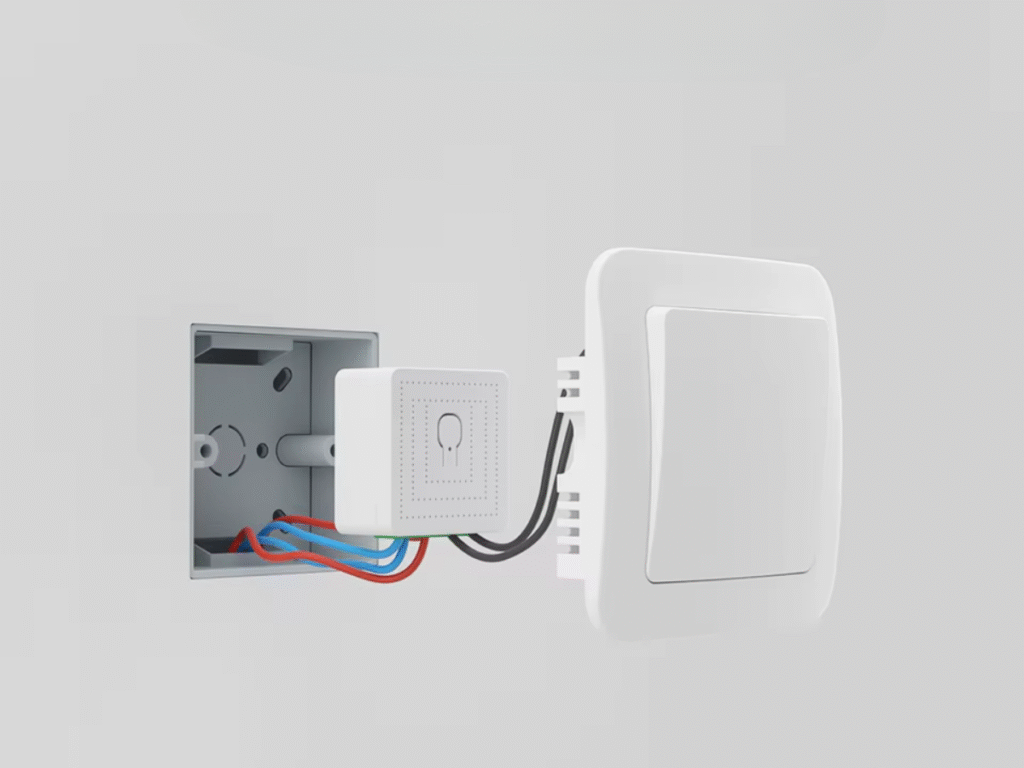
Smart relays (in-wall modules) are compact devices installed behind traditional switches, outlets, or directly inside ceiling junction boxes. They turn your existing wiring into a smart system — without replacing your switches or changing your home’s design. Relays are excellent for lighting, exhaust fans, appliances, and multi-gang setups where smart switches are not practical.
Product Recommendations Coming Soon
HOMETECH is currently reviewing the best in-wall modules suitable for Saudi homes.
Why Smart Relays Are Popular
Convert Any Switch Into a Smart One
Add app, voice, and automation control without changing the external wall switch.
Flexible Installation Options
Relays fit behind switches, inside ceiling roses, inside junction boxes, or in appliance enclosures — giving you more wiring freedom than traditional smart switches
No Neutral Needed (Zigbee Models)
Many Zigbee relays work without a neutral line, making them ideal for older villas and apartments in Saudi Arabia.
Boost Zigbee Mesh Stability
When powered with a neutral line, Zigbee relays work as strong routers/repeaters — extending your Zigbee network and improving the range and reliability of nearby devices.
Compatibility & Technical Notes
Smart Relays typically follow these compatibility rules:
Connectivity:
Most relay modules come in Zigbee or Wi-Fi versions. Zigbee models typically operate locally for better stability, while Wi-Fi versions use cloud features.
Neutral Wire Requirements:
Wi-Fi relay modules require a neutral wire.
Zigbee relay modules usually do not require neutral, depending on the brand and model.
Zigbee Routing Capability:
When installed with a neutral wire, many Zigbee relay modules act as Zigbee routers.
This helps extend your Zigbee mesh network and improves connectivity for devices further away from the hub.
Hub Requirement:
Zigbee models require a compatible hub (Tuya/Matter hub, eWeLink Zigbee hub, etc.).
Wi-Fi models usually do not need a hub.
Ecosystem Integration:
Most relays integrate with Tuya or eWeLink systems, and can also connect to Alexa, Google Home, and sometimes Apple Home (through a Matter-compatible bridge).
Load Type Support:
Relay modules can control lighting circuits, appliances, sockets, and other on/off loads.
(Some models support multi-gang loads or separate channels.)
Installation Notes:
Modules can be installed behind existing switches, inside ceiling junction boxes, or inside distribution panels—depending on space and load type.
Local Control:
Zigbee relays continue to function even if the internet goes down (local automations and switching).
Safety / Electrical Ratings:
Check the rated load (e.g., 5A, 10A, 16A).
High-power appliances require relay modules rated appropriately.
Frequently Asked Questions
Smart Relays — Common Questions Answered
Should I use a relay or a smart switch?
Use a smart relay when you want to keep your existing switch design, have limited wall box space, or need flexibility. Use smart switches when you prefer a clean modern panel look.
Will relays work if I don’t have a neutral wire?
Yes — many Zigbee relay models support no-neutral installation. For optimal performance, neutral-powered models are recommended, especially if you want the relay to work as a Zigbee mesh repeater.
Can relays control appliances other than lights?
Yes. Depending on the relay rating, they can control fans, pumps, heaters, curtain motors, and sockets. Always check the maximum load before connecting.