
Smart Plugs & Socket Modules
Control appliances, lighting, and connected devices with compact smart plugs and in-wall socket modules — simple, flexible, and automation-ready.
Make Any Appliance Smart — Instantly
Smart plugs and socket modules are the easiest way to automate lamps, appliances, fans, routers, and more. Whether you’re upgrading a single device or building room-wide automations, these modules give you full app, voice, and schedule-based control without changing existing wiring.
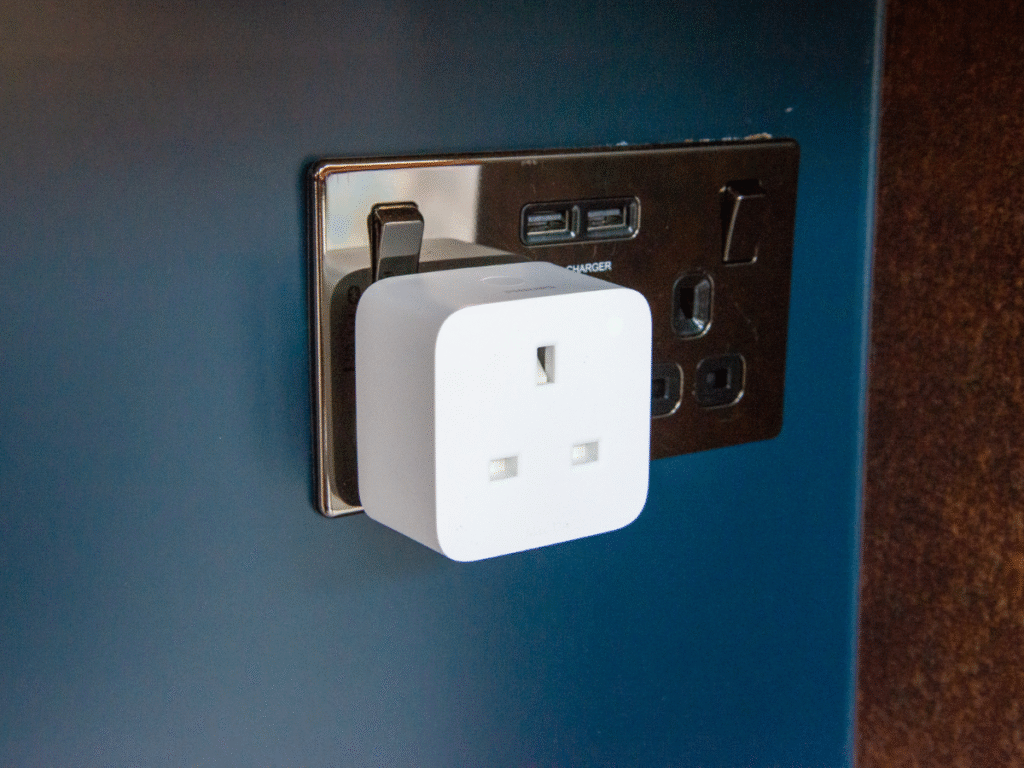
Product Recommendations Coming Soon
HOMETECH is currently reviewing the best devices for the Saudi market.
Why Smart Plugs & Socket Modules Are Popular
Instant Smart Control
Convert any appliance into a smart device with app control, automation, and voice commands.
No Wiring Required
Just plug it in — no installation or electrical changes needed.
Energy Monitoring (Selected Models)
Track power usage and identify devices that consume the most energy.
Perfect for Lamps & Appliances
Great for table lamps, fans, coffee machines, routers, water dispensers, and more.
Compatibility & Technical Notes
Smart Plugs typically follow these compatibility rules:
Connectivity:
Most models use Wi-Fi or Zigbee. Wi-Fi plugs connect directly to your router, while Zigbee plugs strengthen your mesh network.
Ecosystem Integration:
Compatible with Tuya, and can be linked to Alexa, Google Home, or HomeKit (with a Matter-capable bridge or Matter-supported plugs).
Hub Requirement:
Wi-Fi plugs: No hub required.
Zigbee plugs: Require a Zigbee hub but act as strong repeaters to extend the network.
Load Capacity:
Always check maximum wattage — heavy-duty appliances (heaters, ovens, kettles) require higher-rated plugs.
Energy Monitoring:
Available on select models via Tuya, showing real-time and historical consumption.
Safety Features:
Many plugs include overload protection, auto-shutdown, and child-safety design.
Usage Scenarios:
Ideal for lamps, fans, coffee machines, routers, fragrance diffusers, TVs, and small appliances.
Frequently Asked Questions
Smart Plugs — Common Questions Answered
What’s the difference between Wi-Fi and Zigbee smart plugs?
Wi-Fi plugs connect directly to your router and are easy to set up, while Zigbee plugs require a hub but improve network stability by acting as mesh repeaters.
Can smart plugs work with high-power appliances?
Yes, but only if the plug is rated for the appliance’s wattage. Always check the load limit before connecting heaters or large devices.
Do smart plugs increase electricity consumption?
They use very little power (typically under 1W). Energy monitoring models can even help reduce usage by showing which devices consume the most.